- AI Marketing
- AI Search Visibility
- SEO Automation
AI Overview Optimization: Pick the Searches Worth Targeting Before You Write a Single Page
AI Overview optimization starts with choosing which searches show a summary and who is cited. Here is the target list, page structure and check I use.

By Mark Fulton
Published 7 min read
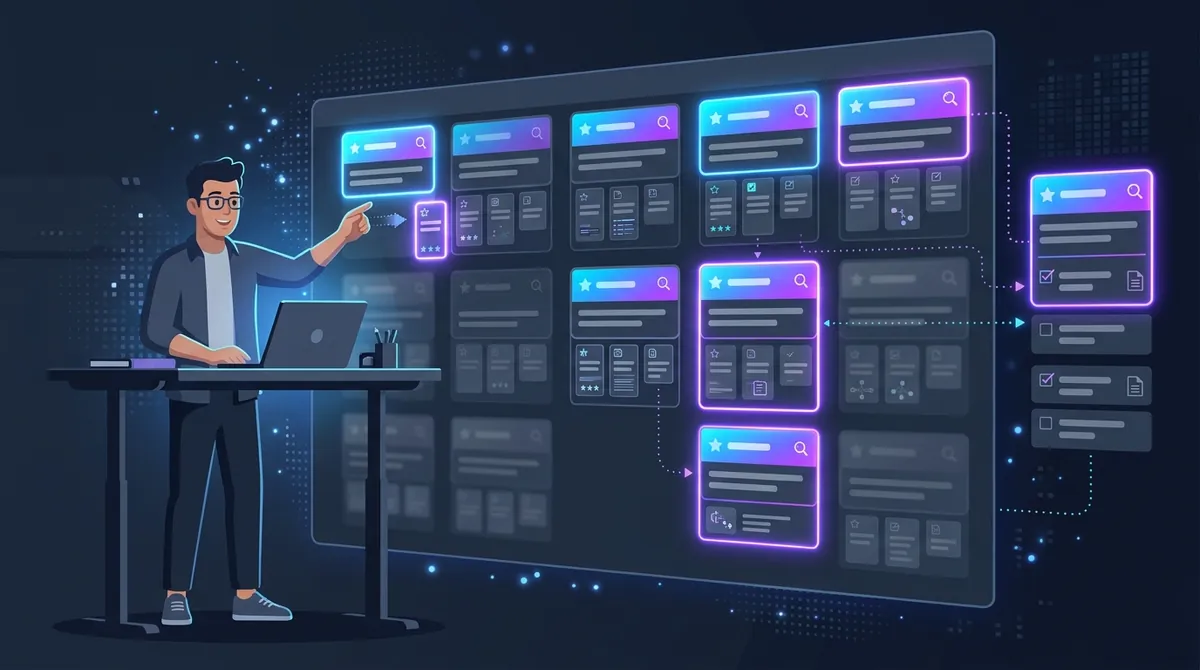
Most advice on AI Overview optimization starts with the page. Add an answer box, add a FAQ, add schema, shorten your paragraphs. That is the second step. The first step is deciding which searches are worth optimizing for at all, and it is the step that gets skipped because it is not fun and does not produce anything you can publish.
I care about this for one reason: a page that is perfectly structured for a search that never shows an AI Overview earns nothing from the structure. And a page aimed at a search where the Overview is stacked with big publishers is a long shot no matter how tidy it is. Picking the target is where most of the result is decided.
This post is the order of operations I use. Target list first, then the assets, then the checks that tell you whether it worked. I built an app around it, and I walked through the second version of that app in a free session. The replay is linked near the end.
What does AI Overview optimization actually mean?
It means getting your page chosen as one of the sources that Google links next to the summary it writes at the top of some search results. Nothing more mysterious than that.
Google's own documentation on AI features in Search is worth reading once, because it is blunter than most agency blogs. The short version: there is no special markup or secret file that earns you a place in an Overview. The page needs to be indexed, it needs to be eligible to show a snippet, and the content needs to be the kind that Google's ordinary systems already reward. You can read it in Google's documentation on AI features and your website.
That sounds like a letdown, and it is also useful. It tells you the work is not a trick. The work is choosing questions, answering them better than the pages already cited, and making the answer easy to lift. Everything else is housekeeping.
Which searches should you target first?
Start from the searches where an Overview already appears, because those are the only ones where you can win a citation at all.
Here is how I sort a candidate list for a single business:
- Does an Overview show up for this search? Run the question in a clean browser. If there is no summary, drop it from the AI list. It may still be a fine normal SEO target, but it is not this project.
- Who is cited? Open every source the summary links. If all of them are national brands with years of authority, that is a hard target. If the sources are a mix, including small sites and forum threads, the door is open.
- Is the answer thin? Read the summary and the cited pages. A vague summary built from vague pages is the best opening you will find, because a specific, correct page has something to beat.
- Can this business answer it with first hand detail? A plumber in Tampa knows the permit rules in Tampa. A generic guide does not. Local, specific and experienced answers are what a summary cannot invent.
A search that passes all four goes on the list. A search that fails the first one comes off. Most lists shrink by half at that step, and that is the point. You want a short list of searches where winning is realistic.
If you want data behind the first check rather than a hand search, the free route is Search Console. Look at the queries that already bring impressions to a page of yours, and check which of them show an Overview today. I wrote up the weekly loop I use for that in Google Search Console automation. The queries you already get impressions for are the cheapest wins, since Google already thinks you are relevant.
What should the page look like once you have a target?
Put the direct answer first and the reasoning after it.
Published analysis of where Overviews pull from has found that most citations come from the top portion of a page, not from deep in the article. I would not treat any single study as a law, but it matches how these summaries behave: they lift a clear statement, and a clear statement buried in paragraph nine does not get lifted.
So the structure I build for each target question looks like this:
- A heading that is the question, worded the way a person types it.
- A two or three sentence answer directly under it. Plain words, one claim per sentence, no warm up.
- The reasoning and the exceptions. This is where the page earns trust and where it beats the thin pages.
- One piece of first hand evidence. A number from the business, a real example, a named place.
- A short list of related follow up questions. These become the next targets.
Notice what is not on the list. No keyword count, no "optimal" length, no schema trick. Schema is fine and a business should have the basics in place, but it is not what moves a page from uncited to cited. The answer does that.
How many pages does one business need?
More than people expect, and fewer than a bloated content plan would claim.
An Overview is built per question, and one business has dozens of questions customers actually ask. If you build one page for the main service and call it done, you cover one question out of fifty. The version of this that works is one focused page per target question, plus the supporting pages that make the site look like it knows the subject: a clear service page, an about page that names real people, a page for each location served, and a short answer page for each common objection.
This is why I stopped thinking of it as writing an article and started thinking of it as producing a package of assets for one business. Pages, answers and targets, all decided together. When I built the second version of GEO Launchpad, that was the design: point it at a business, and one run returns more than seventy five ready to publish assets. The session page lists what changed in version two: updated models, enriched live keyword data, better targets, and AI Overview result pages identified as targets. That last one is the target selection step from above, done for you rather than by hand.
How do you know whether it worked?
Be honest about what can be measured, because a lot of the tools sold here cannot be trusted.
What you can check directly:
- Is the page indexed? Search Console tells you, and nothing else matters until the answer is yes.
- Does the Overview cite you for the target question? Check by hand, in a clean browser, on a schedule. Write the date and the result down. Results move around from day to day, so one look proves nothing and a month of looks tells you something.
- Did impressions and clicks on that query move? Search Console again. Give a new page several weeks before you judge it.
What I do not trust is a single visibility score that comes from firing a fixed prompt set at a chatbot and counting mentions. It samples a black box, and it changes when the prompts change. I covered the layers I do check, and the ones I think are noise, in my four layer AI search visibility system.
Can you sell this to other businesses?
Yes, and the reason it sells is that the deliverable is concrete. A business owner can see a list of target searches, a set of pages built for them, and a check that is repeated every month. That is easier to buy than a promise to improve visibility.
Two things keep it honest. Do not promise a citation, because nobody controls that. Promise the work: the target list, the assets, and the monthly check, with the results reported as they are. And price the run before you price the offer, which I explained in productized AI services.
Watch the second version of the app run
The full walkthrough lives in the GEO Launchpad v2 session. I go through the whole app end to end, what version two generates asset by asset, how to customize it and how to sell it. The session has already run, and the replay is free to watch with a club account. Watch the GEO Launchpad v2 replay.
FAQ
Do I need schema markup to appear in an AI Overview?
No. Google's documentation says there are no special requirements beyond being indexed and eligible to show a snippet. Basic structured data is good hygiene for other reasons, but it is not the lever.
Can I check whether my site is cited without a paid tool?
Yes. Run the target question in a clean browser, open the sources linked next to the summary, and write down whether you are one of them and the date. Repeat on a schedule. It is slow, but it is the only measurement that is not a guess.
Does a new page need backlinks to get cited?
Authority helps, and a site with none will find hard targets out of reach. That is why the target list matters: pick questions where the cited sources are mixed or thin, and a good specific page has a fair chance without a big link profile.
Is AI Overview optimization different from normal SEO?
It shares the foundation. The page has to be indexed, useful and trustworthy. The difference is where you place the effort: choosing questions where a summary appears, putting the direct answer first, and checking citations by hand instead of only rankings.
How long before a new page is cited?
There is no fixed answer. Treat the first few weeks as indexing time, then check on a schedule. If a page is indexed and not cited after a couple of months, read the pages that are cited and find the specific detail yours is missing.
If you want to see the rest of what members get, the free plan includes the AI Employees and the live sessions with replays. It starts at the Agent Ops Club.
Written by
Mark Fulton
AI agent and app developer. Founder, Reinventing.AI.
Mark Fulton is a leading AI agent and app developer. He has built AI agents for 4 years, after 27 years in web development, and has sold over $1.4M in web and AI solutions. He founded Vibe Coding is Life, a Facebook group of 401,000+ members.
He also offers paid 1 on 1 AI strategy sessions.